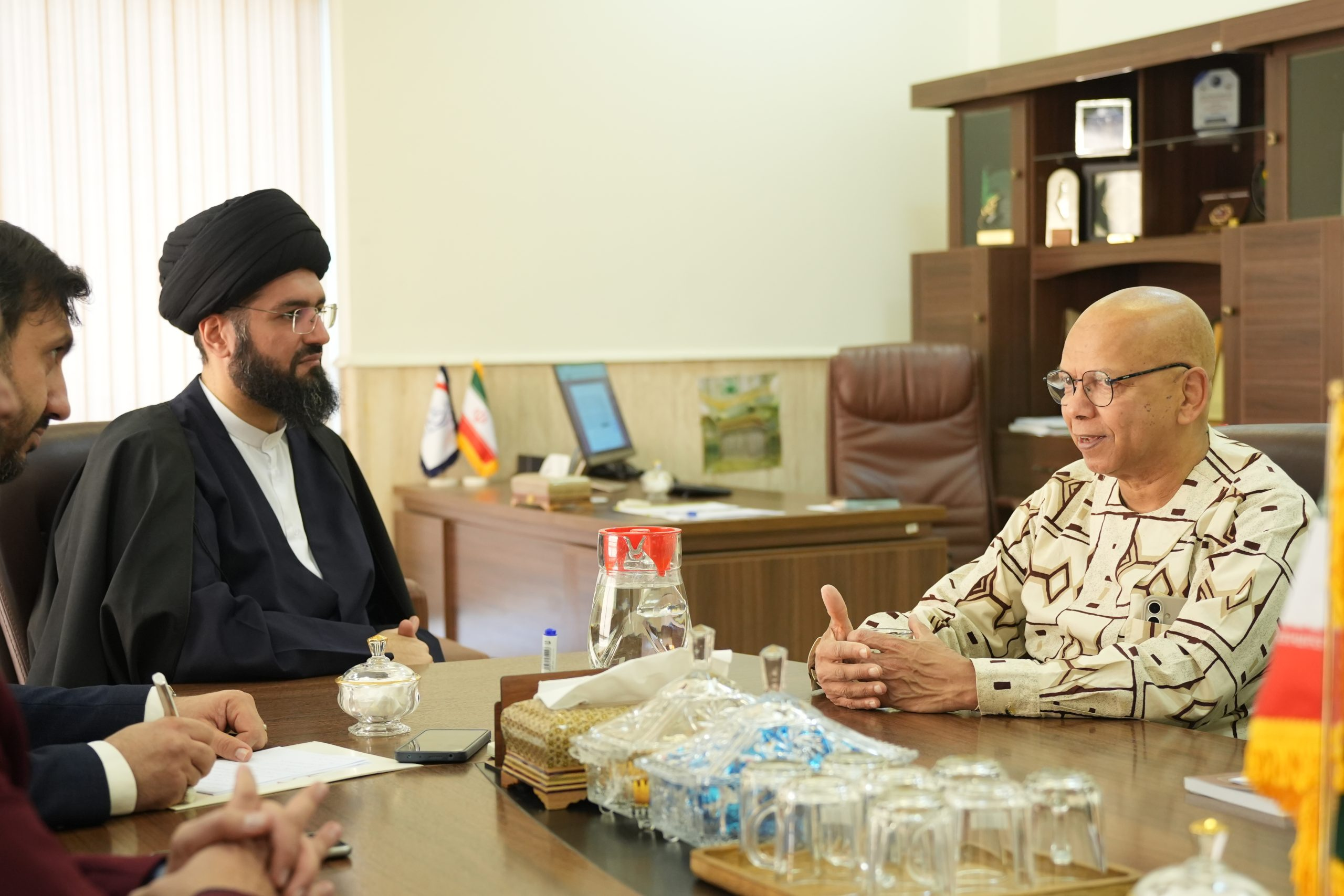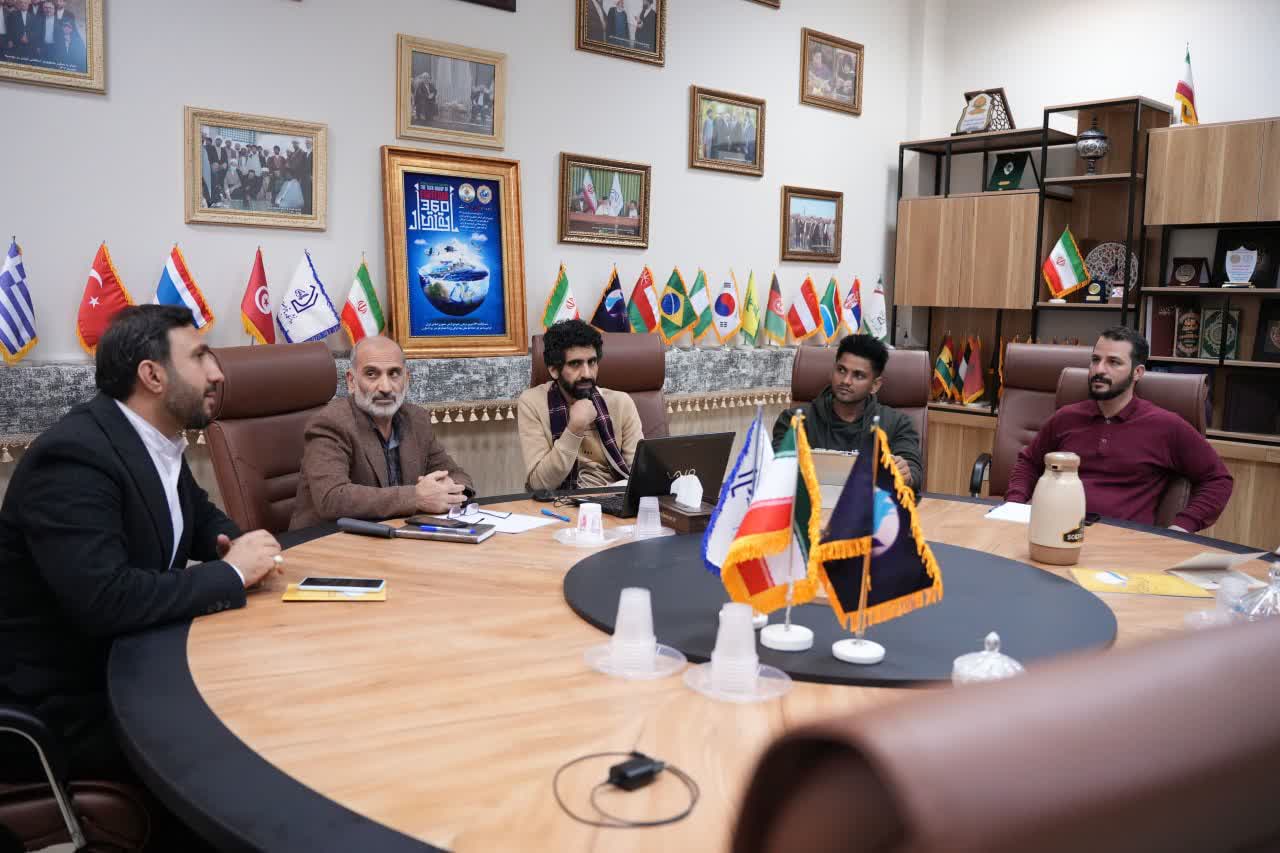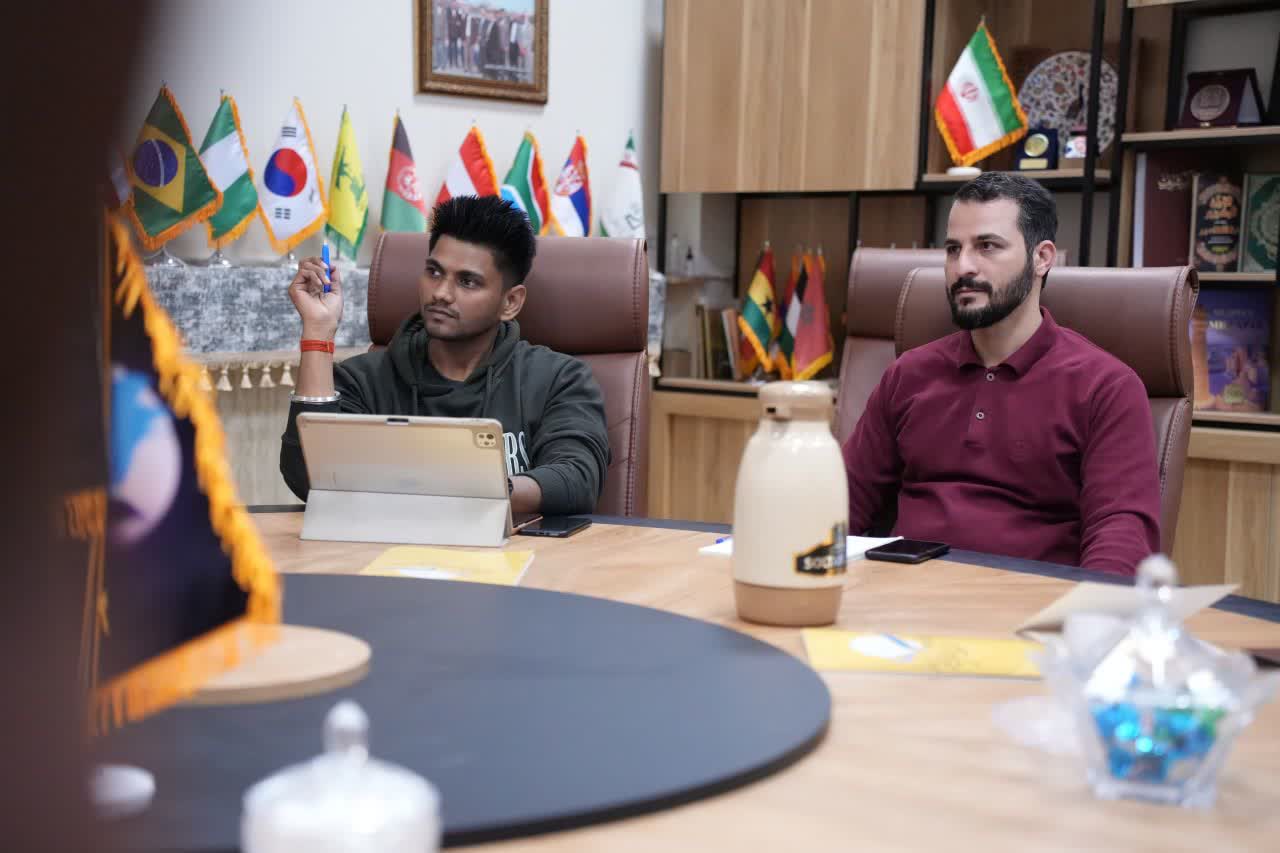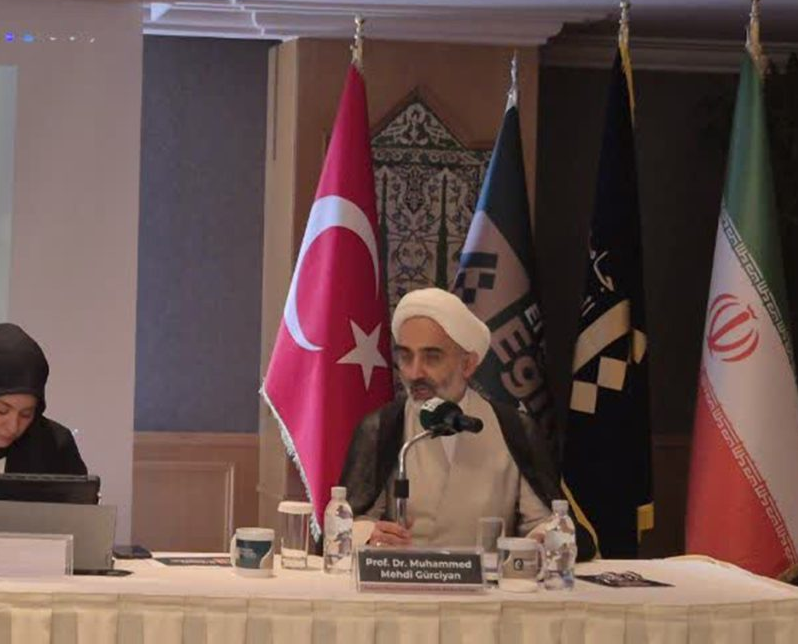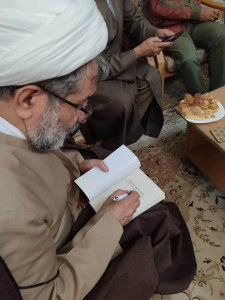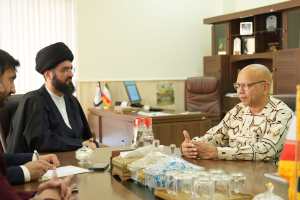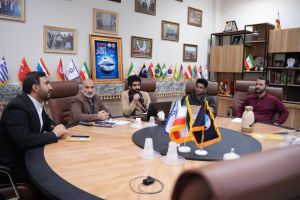
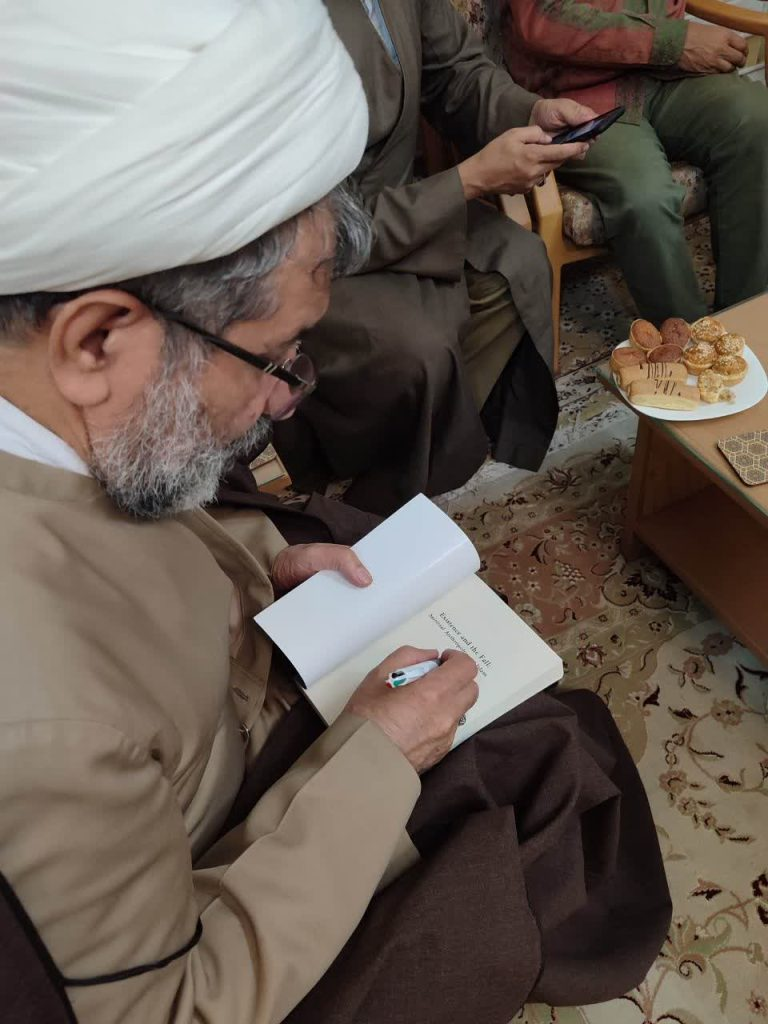
An academic meeting and scholarly dialogue was held with the participation of Dr. Farid Esack, a distinguished scholar of Islamic Studies, alongside Dr. Hamid Parsania, Dr. Shoja Alimirza, and Dr. Sajjadi, with the presence of a group of American and Canadian students from Baqir al-Olum University.
This session, conducted in the form of a scholarly dialogue, was devoted to examining the central question of: “In response to Western unilateralism, what kind of model can be proposed that is appealing and relatable to the nations of the world, and through what discourse and language should this model be introduced to the global community?”
An academic meeting and scholarly dialogue featuring Dr. Farid Esack, a distinguished South African scholar of Islamic Studies, was held on Friday at the SAIS School. The session was attended by Dr. Hamid Parsania, Dr. Shoja Alimirza, Dr. Sajjadi, along with a group of American and Canadian students from Baqir al-Olum University.
This session took the form of an interactive scholarly dialogue and was dedicated to examining the central question of: “In response to Western unilateralism, what kind of model can be proposed that is appealing and relatable to the nations of the world, and through what discourse and language should this model be introduced to the global community?”
Dr. Parsania: Islamic Civilization Is the Most Serious Rival to Western Civilization in the Contemporary World
During the session, Dr. Hamid Parsania presented a historical and philosophical analysis of the intellectual transformations of the Western world following the World Wars. He explained that after the First and Second World Wars, Marxism emerged from within modern Western civilization and liberalism as the “Other” of the capitalist system. However, over the course of its historical development, this movement ultimately failed to withstand the hegemony of the liberal-capitalist order and was consequently marginalized.
He then referred to the historic letter of Imam Khomeini (RA) to Mikhail Gorbachev and offered a philosophical and mystical analysis of this message. Dr. Parsania emphasized that in this letter, Imam Khomeini, with profound insight, critically examined the fundamental weaknesses of Western philosophy and worldview, while at the same time presenting the capacities of Islamic philosophy, Islamic wisdom, and the intellectual heritage of Muslim thinkers as a serious alternative. He also noted that Imam’s proposal to send intellectual elites to gain direct familiarity with Islamic wisdom and philosophy reflected a deep confidence in the civilizational and epistemological potential of Islam.
Referring to the developments following the collapse of the Eastern Bloc, this faculty member of Baqir al-Olum University added that after the failure of Marxism and the renewed dominance of the West, Western thinkers turned to the idea of the “Dialogue of Civilizations.” According to him, the emergence of this concept indicates that the West had come to realize that addressing its internal crises was not possible solely from within Western civilization itself, and that it needed to take into account the capacities of other civilizations.
Emphasizing the position of Islamic civilization, Dr. Parsania stated that Islamic civilization represents the most serious and significant rival to Western civilization, as it possesses profound spiritual, faith-based, and social capacities, along with the ability to govern society and offer a comprehensive civilizational model. For this reason, the Islamic world has gained particular importance for the West. At the same time, he noted that within the Islamic world itself there exist extensive capacities which can contribute to the maturation of Islamic civilization only through solidarity, participation, and the active mobilization of these potentials.
Dr. Farid Esack: Shia Thought Is Profound but Faces Challenges in Global Introduction
Dr. Farid Esack, while presenting his views, highlighted two key points. First, he described the thinking of Shia scholars and clergy as distinguished by its depth, maturity, and intellectual sophistication, evaluating this approach as highly profound and worthy of reflection. At the same time, he raised a critical question: why has this deep and rich thought—particularly that found among Shia intellectuals and in Iran—failed to establish effective engagement with the wider world and secure a rightful place in the international arena among leading scholars and major academic centers?
Dr. Esack identified this issue as a significant weakness and emphasized that for this thought to become globalized—and for it to be effectively presented and heard at the international level—serious and practical strategies must be devised.
The scholarly session concluded with active participation from attendees and an exchange of views on the future of Islamic civilization and its relationship with the contemporary world.