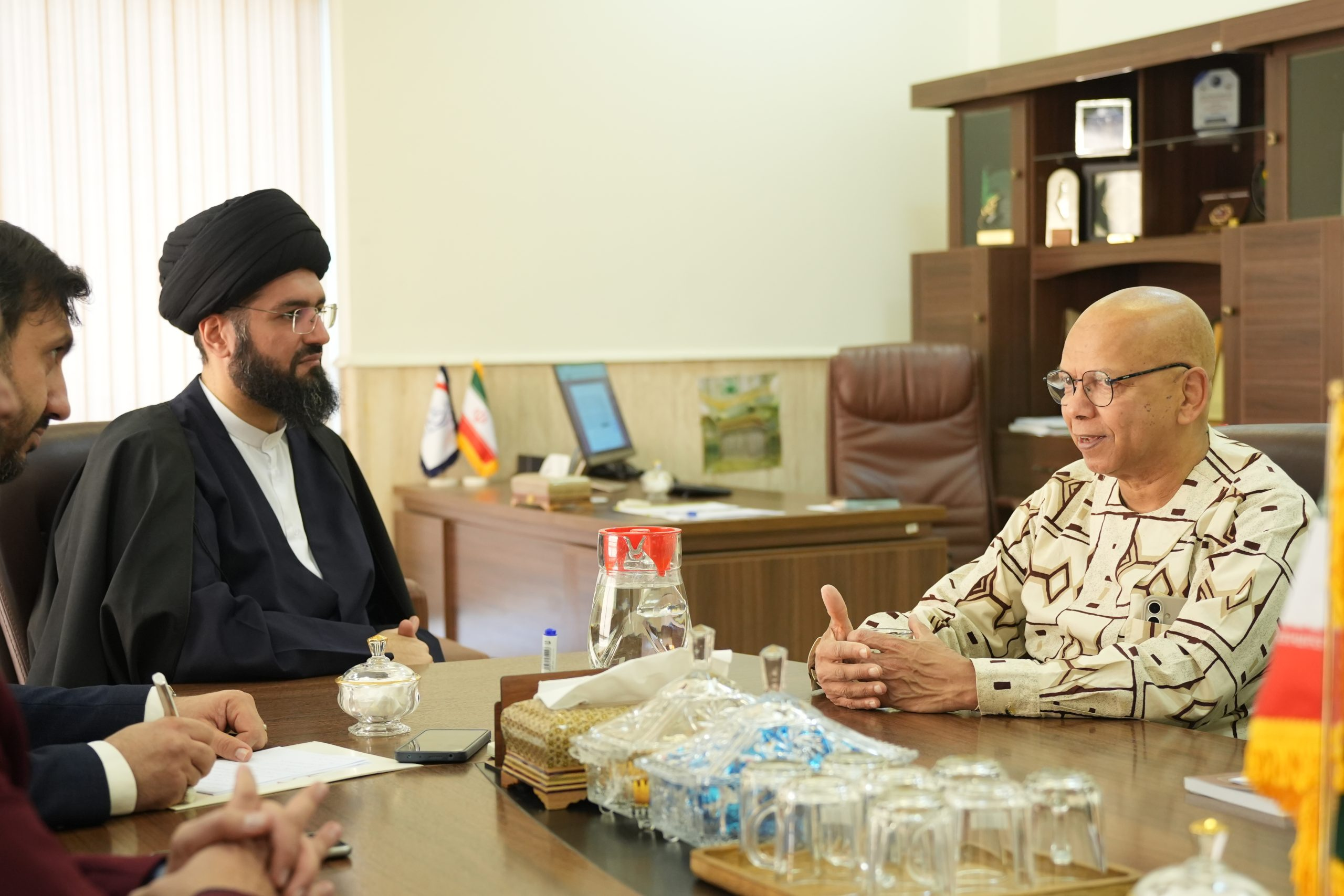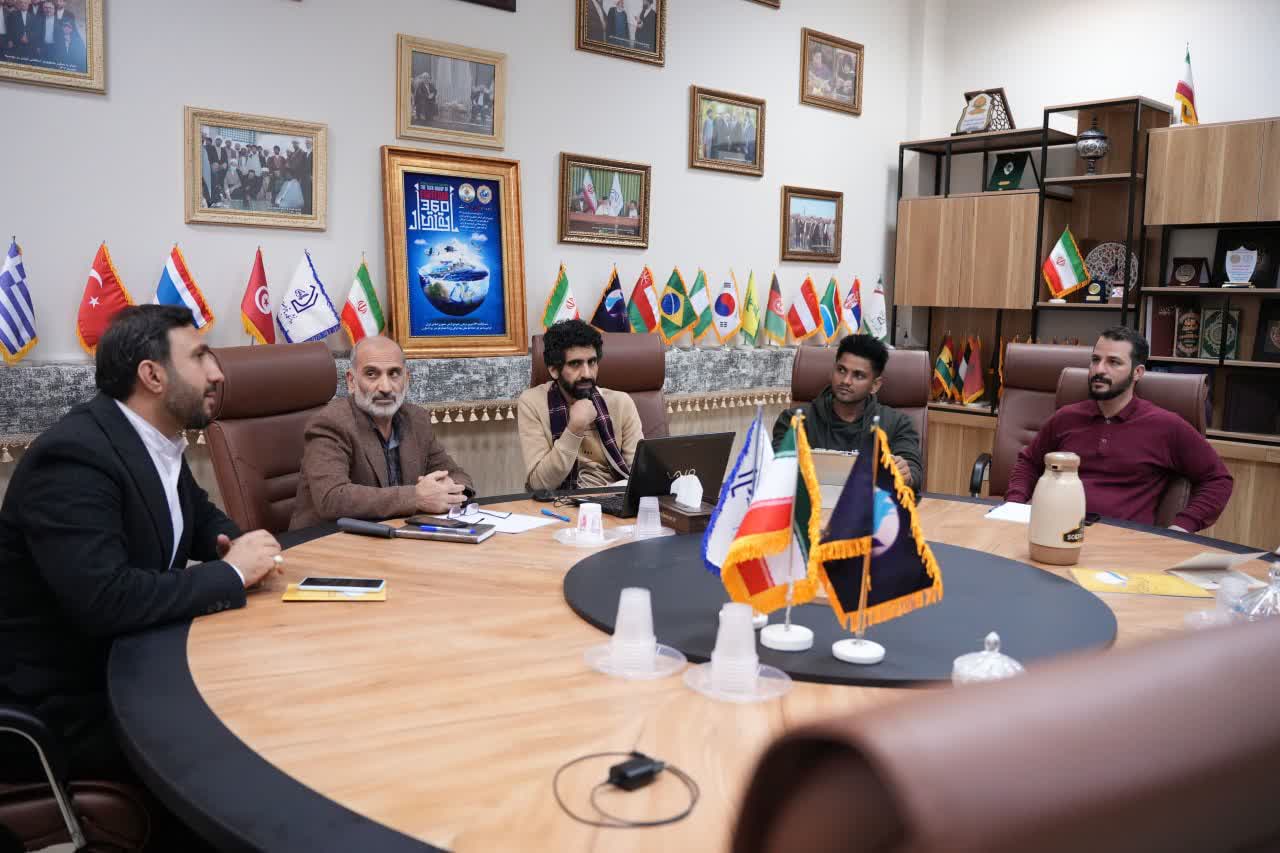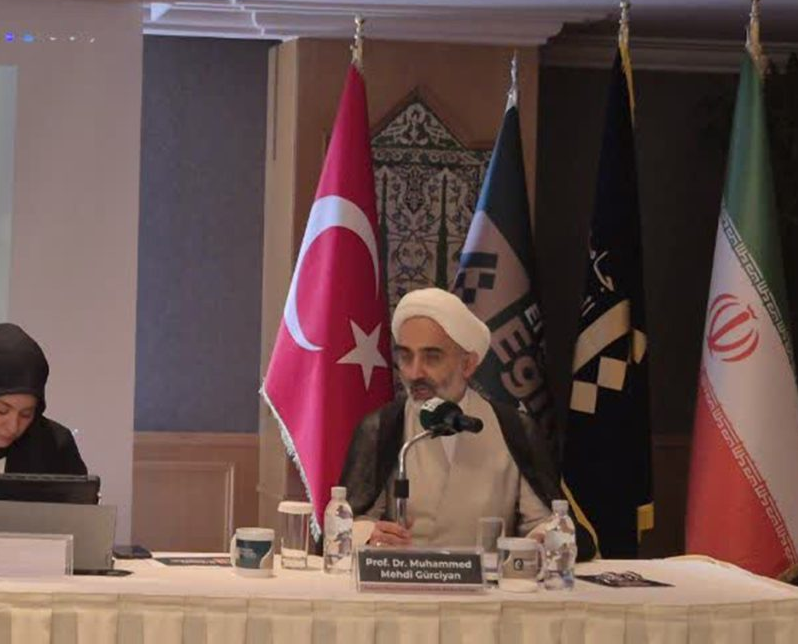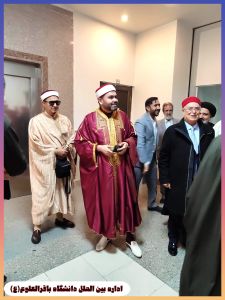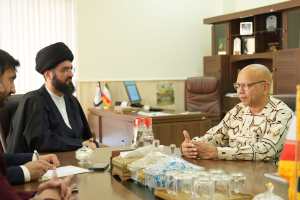
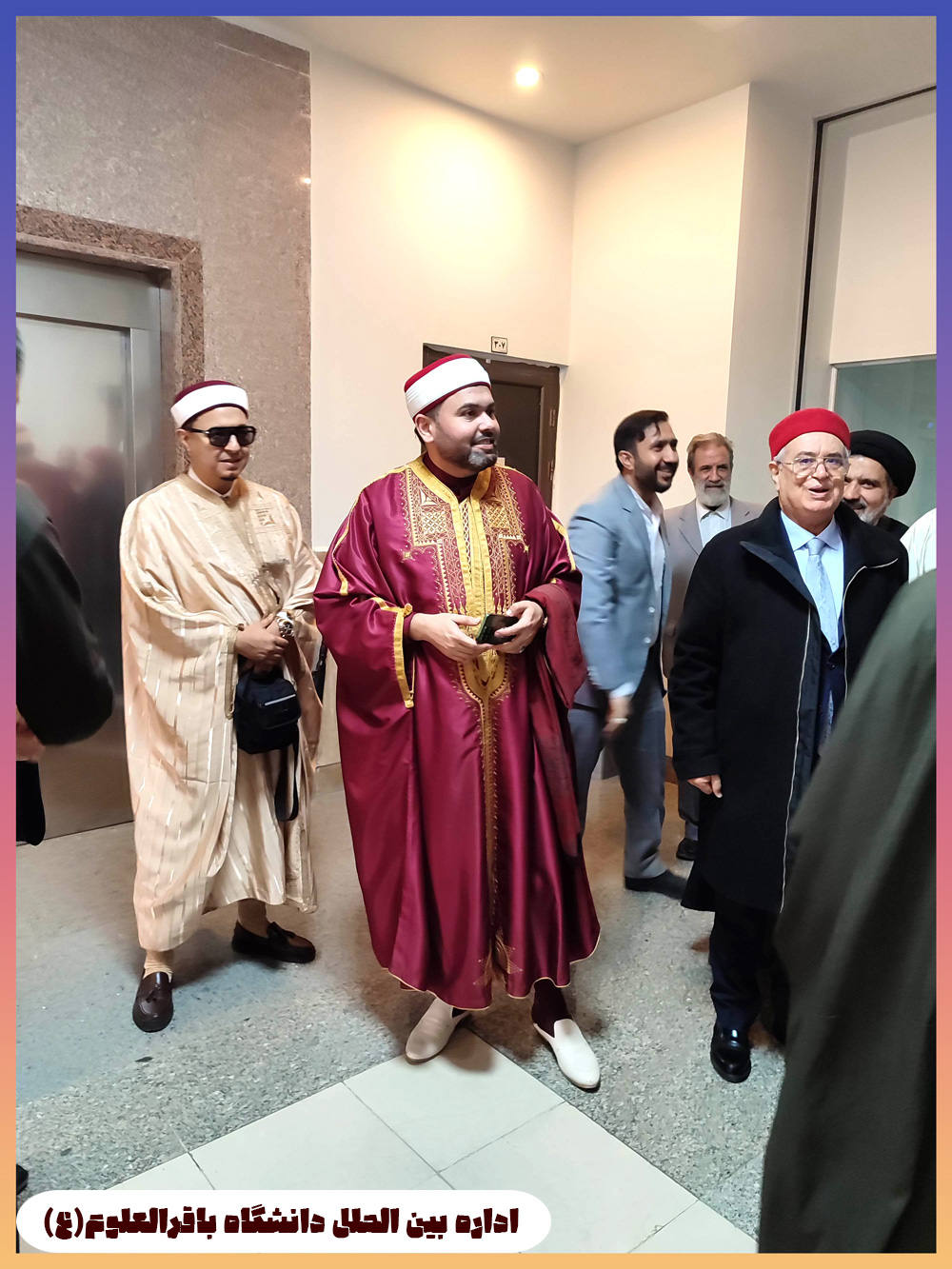
Qom – Exclusive News Agency: In a cordial and scholarly meeting held at Baqir al-Uloom University (A.S.) with a delegation of prominent Tunisian scholars and professors, both parties emphasized the necessity of revisiting the “Theory of Knowledge”, addressing the intellectual foundations of Western civilization, and applying modern models of Islamic governance.
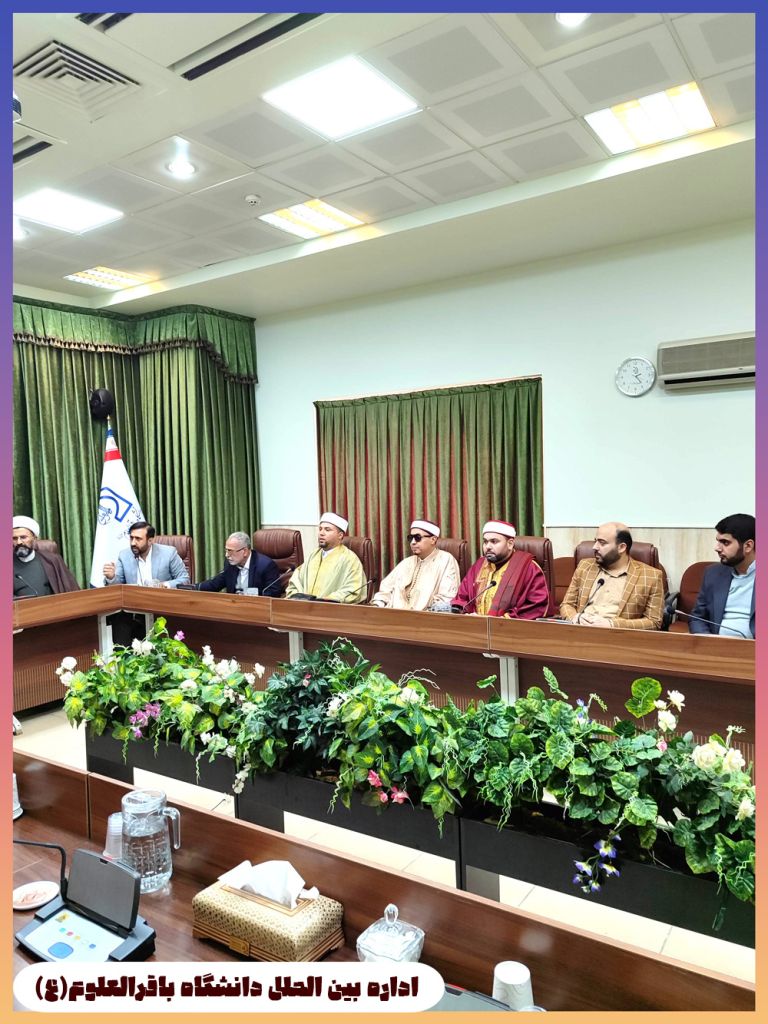
According to the Public Relations Office of Baqir al-Uloom University (A.S.), the seminar was convened to examine the opportunities and challenges facing the Islamic world and to highlight the role of religious elites in shaping a civilization-building future.
Introduction: Integrating the Seminary and the University on the Path to a New Civilization
At the beginning of the session, Dr. Seyed Hadi Sajedi, Vice President for International Affairs at the university, welcomed the Tunisian guests and introduced Baqir al-Uloom University (A.S.) as a unique institution operating under the Office of Islamic Propagation of the Qom Seminary and the Ministry of Science. He emphasized that most of the university’s students are graduates of advanced seminary levels who have entered the academic arena to study contemporary humanities and social sciences, aiming to fill existing gaps in religious governance with modern knowledge.
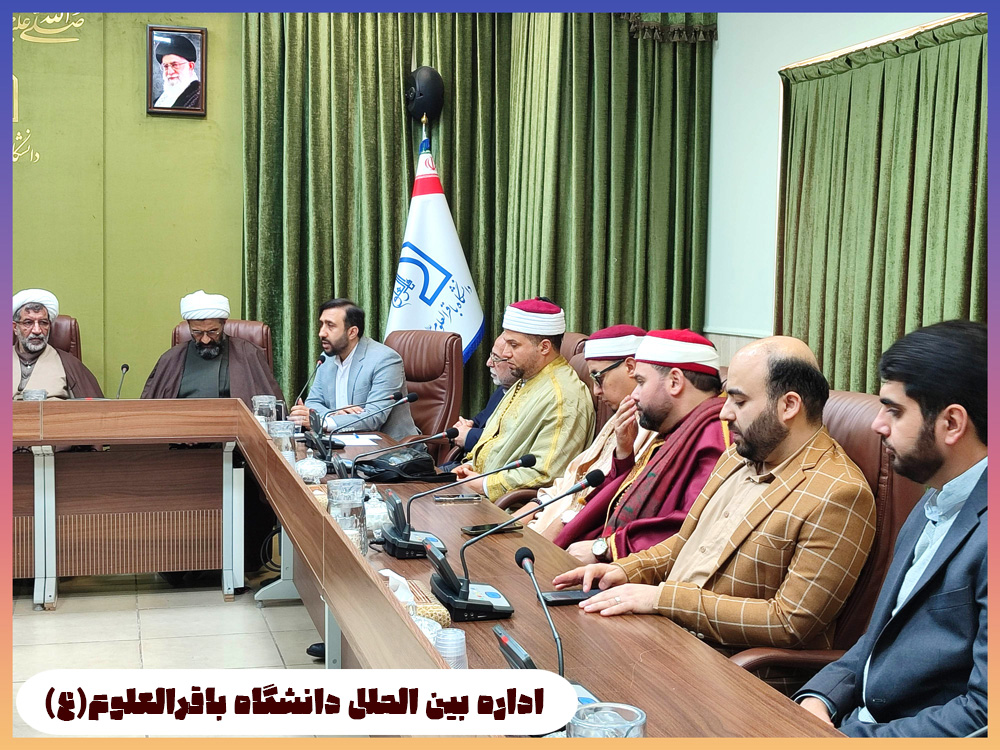
Dr. Abdeljalil Salem – Former Minister of Religious Affairs of Tunisia and Former President of University of Ez-Zitouna
Dr. Salem, congratulating Iran on the anniversary of the Islamic Revolution, described the country as the “Pillar of Resistance in the Islamic World” and analyzed the consequences of Operation Al-Aqsa Storm, stating:
“Operation Al-Aqsa Storm was not merely a military battle but a major philosophical and historical transformation. For the first time in Western history, the narrative of the ‘Holocaust’ gave way to the narrative of ‘genocide.’ Western civilization, which was built on the killing of peoples and Torah-based texts, has now been discredited before the global public opinion.”
He further added:
“The post–World War II international system has reached a deadlock. As Muslims (Shi’a and Sunni), we have a duty to establish a new global system based on human dignity and the ethical values of Islam. Today’s world is more prepared than ever to embrace Islamic thought.”
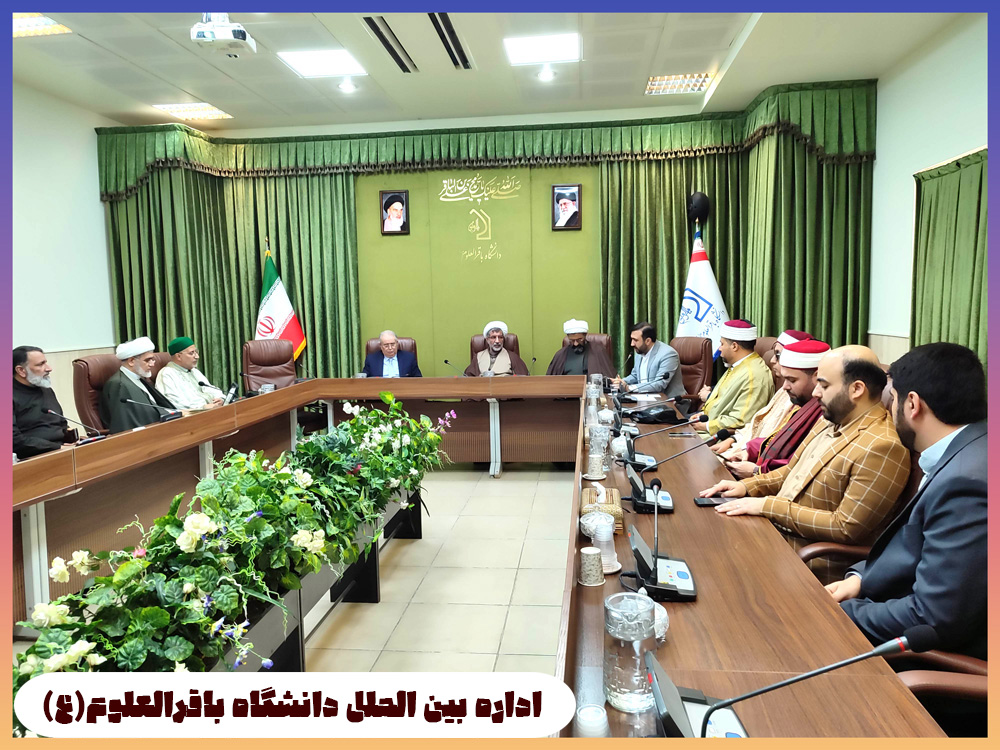
Dr. Qasemi – Professor of Theology and Sharia at University of Ez-Zitouna
Dr. Qasemi emphasized the necessity of intellectual independence and a return to the epistemological roots of Islam, posing a fundamental question to the Iranian professors:
“Through three disciplines—Hestology (Ontology), Epistemology, and Axiology—the West has been able to reconstruct the Arab and Islamic intellect. Many of us speak Arabic, yet we think with a Western mindset. We must ask ourselves: Have we truly reflected on our own intellect?”
He criticized the current state of teaching in some universities, stating:
“We are still teaching Aristotelian logic, even though history has moved beyond it. Ibn Khaldun is the true founder of sociology, yet we continue to follow Auguste Comte. We must reconstruct our own social theory based on Qur’anic approaches.”
Dr. Abdelkarim Trabelsi – Professor of Islamic Jurisprudence and Quranic Interpretation, Imam of Jami’ Fath Mosque, Tunisia
He emphasized the importance of transforming religious discourse and aligning it with contemporary realities.
“What has harmed our Ummah the most is bigotry. A jurist and preacher must be able to adapt their discourse to time and place. We should use ‘Fiqh al-Khilaf’ to develop religious dialogue and create ease (Taysir) in people’s lives.”
Sheikh Maher Al-Senoussi – Imam of Sousse City and Religious Programs Expert, Tunisian Radio and Television
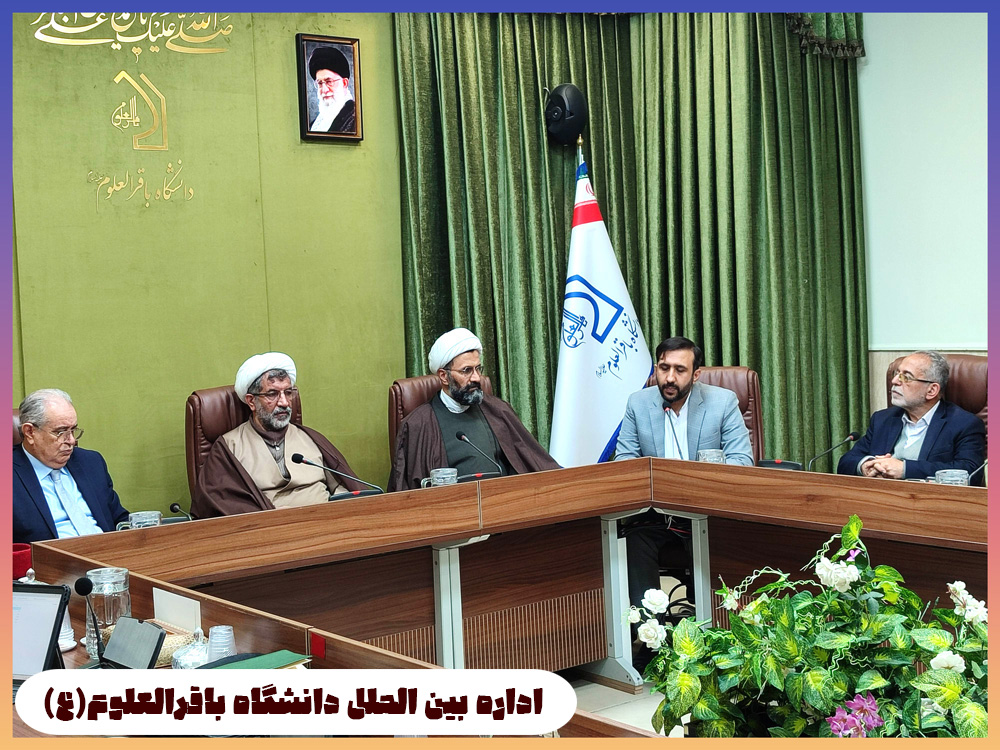
He, praising the stability of the Islamic Revolution of Iran, described it as a “divine revelation” rather than a purely human endeavor, and stated:
«The Iranian Revolution is founded upon the reform and transformation of the human being. Here I have witnessed a people who implement the Quran on the ground and within the very texture of life—not merely within the prayer niches of mosques. This constitutes the fundamental difference with certain other countries that speak much yet prove weak in practice.»
The Response of the Faculty of Baqir al-Olum University and the Introduction of Achievements
In response to the concerns of the guests, the university faculty elaborated on the university’s academic activities.
- Hojjat al-Islam Dr. Mohsen Alviri (Head of the History Department at Baqir al-Olum University): Dr. Alviri announced the establishment of a new field of study, “Philosophy of History,” and said:
“In this field, we examine the principles of ontology and epistemology from the perspective of history and based on Islamic foundations. Our goal is to reinterpret the historical heritage to find solutions for the future. Even a simple hadith about a child’s small bird (the Hadith of Nughayr) can yield 60 to 120 educational, jurisprudential, and governance principles for the interaction between a ruler and the people.”
- Hojjat al-Islam Dr. Yousefi (Head of the Department of Philosophy and Theology): He emphasized an offensive (rather than passive) approach towards Western philosophies:
“Our main focus at the doctoral level is on ‘applied philosophies’ (Philosophies of the Sciences), such as the Philosophy of Religion, Philosophy of Law, and Philosophy of Social Sciences. We seek scientific engagement with Western foundations and aim to present powerful alternatives derived from Transcendent Wisdom (Hikmat al-Muta’aliyah) and Islamic Philosophy.”
“An Analysis of the Epistemic Crisis in the West and the Necessity of Islamic Civilization-Building”
Part Two of the Report: In the continuation of the specialized meeting between the faculty of Baqir al-Olum University and prominent Tunisian scholars, key topics concerning the “Critique of Modern Philosophy,” the “Reinterpretation of the Legacy of Ibn Khaldun,” and the “Necessity of Unity of Word (Solidarity) in the Face of Western Scientific Hegemony” were discussed and examined.
In this part of the meeting, the Iranian professors emphasized the necessity of moving beyond a passive approach to Western humanities, while the Tunisian guests underscored the eminent status of thinkers such as Taha Abdurrahman in critiquing modern rationality.
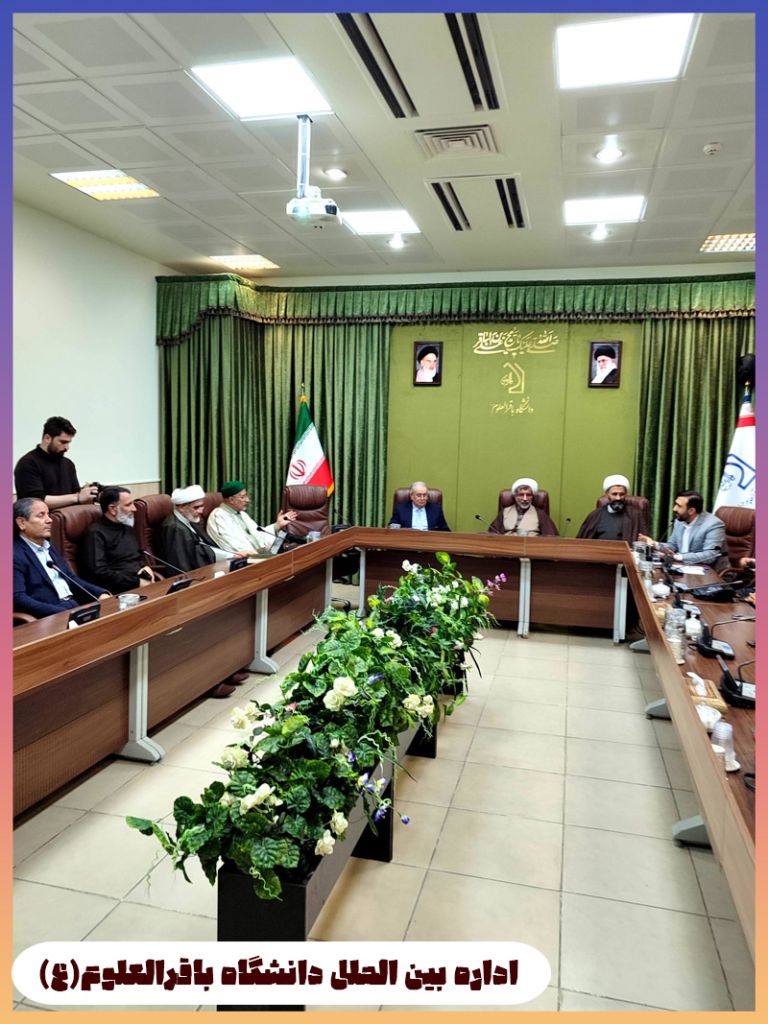
۱. The Offensive Approach to Western Philosophy and the Strategy of Taqrib (Rapprochement/Approximation)
Hojjat al-Islam Dr. Yousefi (Director of the Department of Philosophy): Dr. Yousefi, while explaining the university’s academic policies in engaging with the West, emphasized the dichotomy of “Authority against the enemy” and “Fraternity towards Muslim brothers”:
“We adopt an ‘offensive’ approach, not a passive one, towards what comes to us from the Western sphere. We must stand firmly against the intellectual onslaughts of the West. However, within the Islamic sphere, I believe that we, the scholars and academics, must adopt a ‘Taqribi (rapprochement) approach.’ Unity of word (solidarity) around commonalities such as the Quran, the Messenger of God (PBUH), and the Ahl al-Bayt (AS) should be the foundation of our work.”
He added, addressing the students and youth:
“We must teach our youth that avoiding ethnic prejudices and strengthening the spirit of resistance in thought and action is the only path to the victory and empowerment of Islam.”
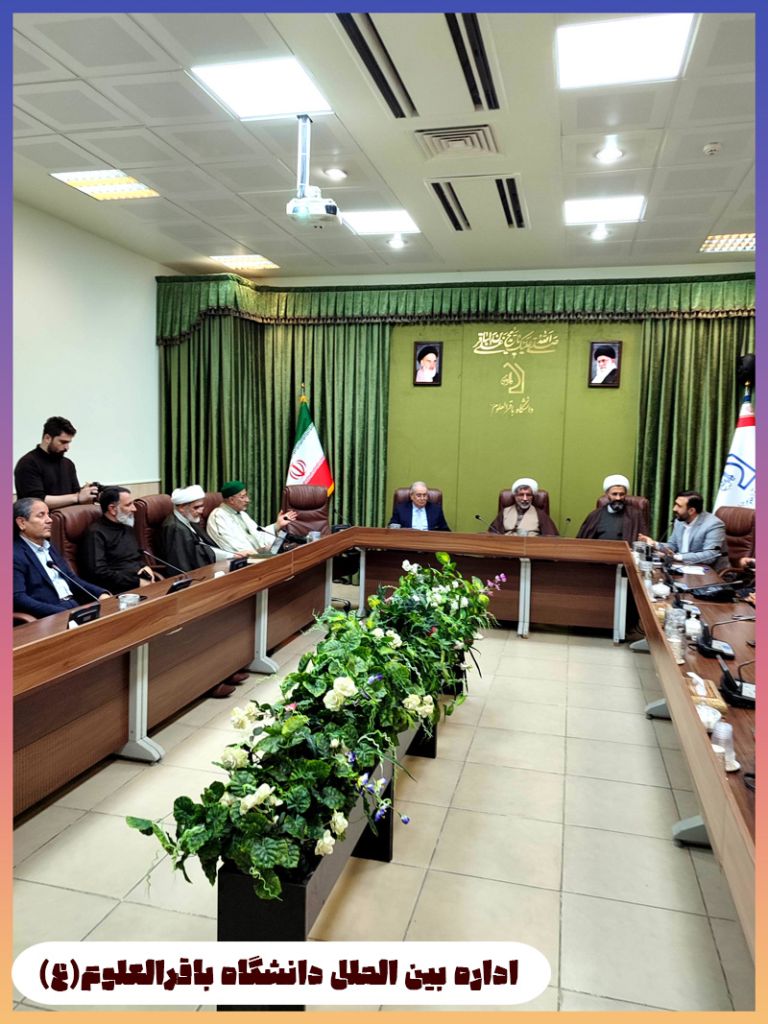
۲. The Death of Metaphysics in the West and the Return to Tawhid (Monotheism)
Hojjat al-Islam Dr. Hamid Parsania (Professor at Baqir al-Olum University and Member of the Supreme Council of the Cultural Revolution): Dr. Parsania, referring to the historical significance of Qayrawan in Persian literature, elaborated on the profound layers of culture:
“The deepest layer of any culture is its ontology. Modern Western culture has defined its identity by breaking away from revelation. Thinkers like Kant, by reducing metaphysics to the natural sciences, effectively announced the ‘death of metaphysics.’ In contrast, the word ‘Tawhid’ (monotheism) transforms all illusions about the universe and constructs an epistemology and anthropology commensurate with itself.”
He further stated, referring to the harms of colonialism:
“The greatest damage to Islamic culture was inflicted through politics and power. Colonialism sought to strip our countries of intellectual power from within; so much so that today our scientific concepts and terminology (such as equating ‘knowledge’ with ‘Science’) are entirely imported from the West and have lost their original Islamic meaning.”
۳. Ibn Khaldun: From Ash’arism to Realism
Dr. Abdeljalil Salem (Former Tunisian Minister of Religious Affairs): In an analytical response to Dr. Parsania’s remarks, Dr. Salem addressed the intellectual roots of Ibn Khaldun:
“In his discovery of the science of ‘Umran (human civilization/social organization), Ibn Khaldun began by critiquing the later theology (Kalam), particularly that of Fakhr al-Din al-Razi. He realized that theology no longer served its previous function and that a new science needed to be established to understand history and the state. Although he grew up in an Ash’ari environment, in his theory of causality, he quietly moved towards the view of Ibn Rushd (Averroes) and Aristotelian determinism in order to be able to lay the foundations for the science of society.”
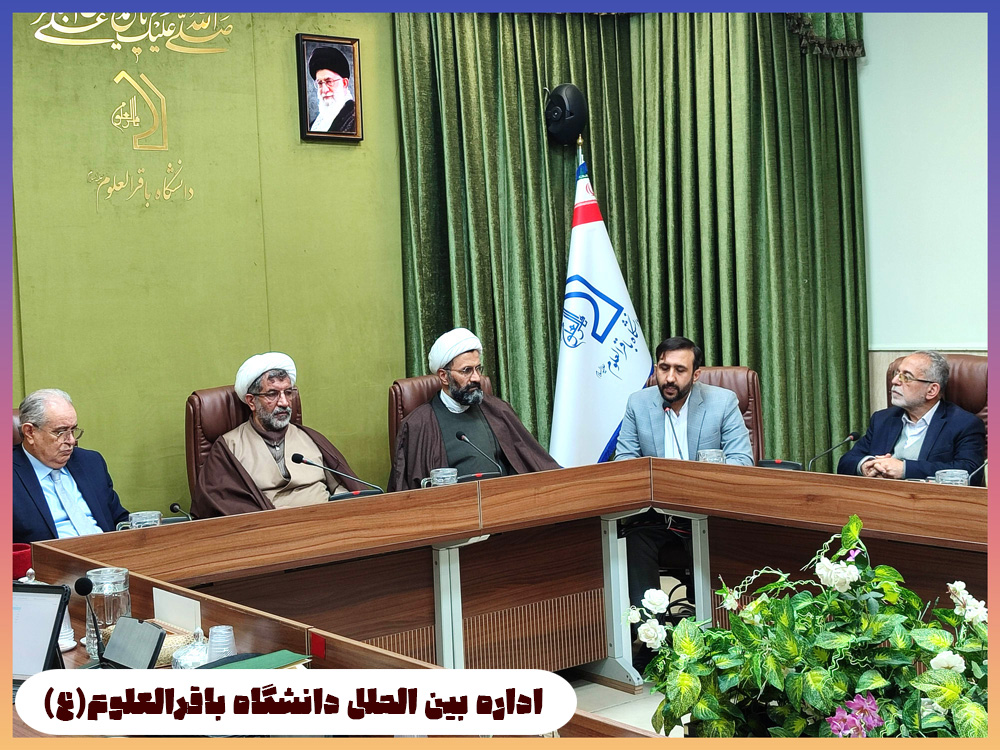
He also emphasized the importance of studying the works of Taha Abdurrahman:
“Taha Abdurrahman is the greatest contemporary Islamic philosopher, who has offered a powerful critique of Kant, Nietzsche, and Descartes. He believes that figures like al-Jabri or Hassan Hanafi are imitators of Greece or the West, and that we must return to authentic Quranic concepts.”
Marginal Notes:
- It was announced during this meeting that some works by Taha Abdurrahman have been translated in Iran and have even won the Islamic Republic’s Book of the Year Award.
- For the past 20 years, the faculty of Baqir al-Olum University have been holding continuous critique sessions on Kant’s texts from the perspective of Transcendent Wisdom (Hikmat al-Muta’aliyah).
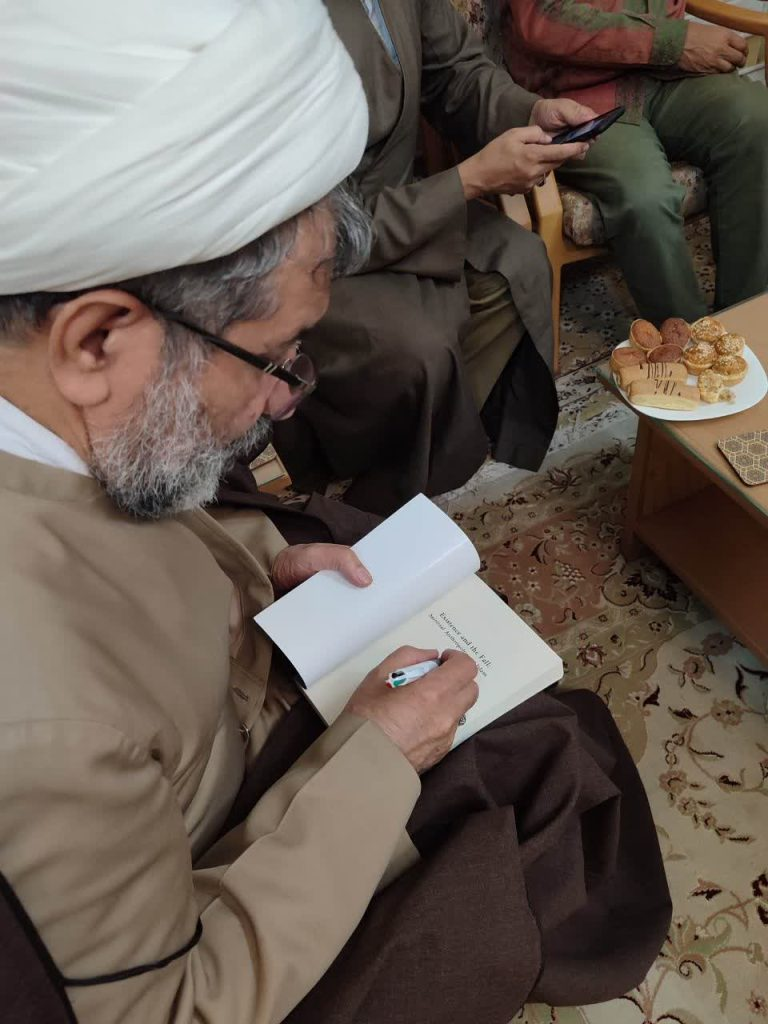
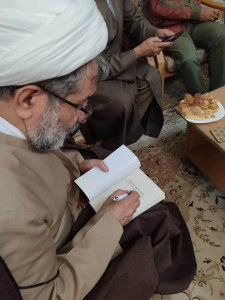
- Dr. Abdeljalil Salem donated a book that he had authored 41 years ago to the university library as a commemorative gift.